South Africa's Load Shedding Is "Gone" — So Why Is Solar Street Light Procurement Accelerating?
If you're doing business in South Africa as an engineering contractor or lighting importer, the most counterintuitive market signal of 2026 has already arrived: the load shedding has stopped, but the solar street light orders haven't.
Eskom achieved more than 340 consecutive days without load shedding in 2026 and predicted that the entire winter (April to August) would pass without implementing it. By September, that prediction had been validated — South Africa got through an entire load-shedding-free winter, with consecutive days without load shedding reaching 476.
Logically, the "emergency lighting" selling point of solar street lights should have been weakened. But the reality is exactly the opposite: Mbombela is pushing ahead with converting the entire city's street lights to solar, Polokwane has stated explicitly that it will "stop repairing street lights that keep getting stolen and switch to solar instead," and Cape Town has allocated R1 billion to street light modernisation, with R165 million specifically for LED and solar street light replacement.
Why? Because the driving force behind solar street lights in South Africa was never just load shedding.
Real Driver One: Cable Theft Has Pushed Municipalities into a Corner
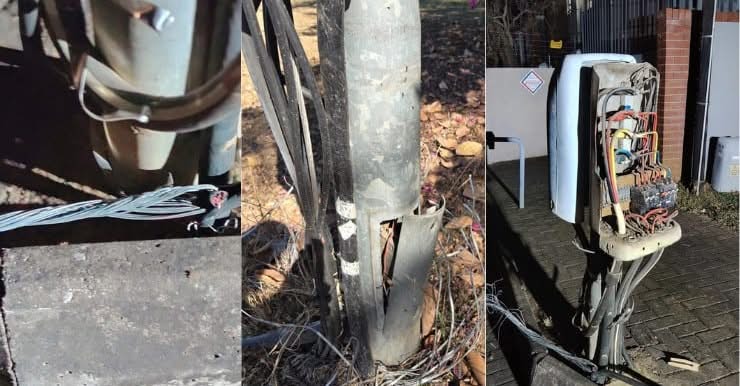
In a public appeal in August 2026, Mbombela municipal spokesperson Joseph Ngala said something remarkably blunt: "Most of our electrical infrastructure is under attack and the situation is getting out of control. It's a major blow to the municipality because we have to spend more money replacing stolen equipment, money that could have gone to other service delivery projects."
The specific numbers are even more alarming: Mbombela had more than 50 street lights that had just been repaired vandalised again, with criminals prying open electrical boxes and stealing cables and circuit breakers. Around the same period, Enoch Mgijima Local Municipality in the Eastern Cape disclosed that it had spent more than R11 million in just three months replacing stolen cables. Buffalo City Metro arrested 46 cable theft suspects in just over seven months.
The vicious cycle is brutally clear: repair the light → cable gets stolen → repair again → stolen again. Municipal money keeps pouring into the same black hole, while the streets stay dark.
Solar street lights cut this cycle off at the root. No cables means nothing to steal. Polokwane's statement in May 2026 put it most clearly: "The municipality will no longer continue the cycle of repairing street lights that are repeatedly vandalised and stolen, which has proven costly and ineffective. Instead, we are moving to a more resilient and forward-looking solution."
For any street lamp supplier, this means the core procurement logic of the South African market has fundamentally shifted: anti-theft design is not a value-add — it is the entry threshold.
Real Driver Two: Electricity Bills Are a Wound That Never Stops Bleeding
Even if load shedding stops, the electricity bill doesn't disappear.
When Mbombela pushed forward with solar conversion of its street lights, the core rationale it gave was remarkably simple: "This will save the municipality significantly on electricity costs. In some cases, electrical street lights stay on all day after a fault, but with solar, we're confident they won't cost us money."
This is not an isolated case. In its 2026/27 budget, Cape Town specifically allocated R165 million to replace ageing street lights with energy-efficient LED technology. A city that is experiencing "no load shedding" is still spending big to replace traditional street lights — because electricity is an ongoing operating expense, while LED and solar are one-time capital investments.
For a LED Street Light Supplier, the value of this signal lies in this: the competitive focus of the South African market is shifting from "emergency backup" to "operating cost optimisation." Municipal procurement decision-makers no longer care about "will it light up during load shedding" — they care about "how much will it save us in electricity over ten years."
Real Driver Three: Solar Street Lights Have Passed the "Feasibility Test"
Before 2026, the general attitude of South African municipalities towards solar street lights was "worth a try." After 2026, the attitude became "we're already using them, let's keep going."
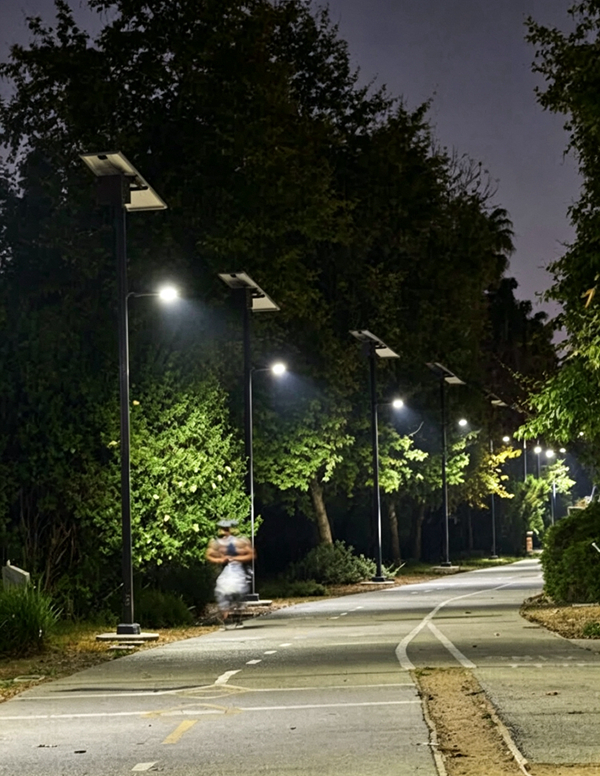
Mbombela has already completed solar street light installations along major routes including Dr Enos Mabuza Drive, Ferreira Street, Madiba Drive, and the R40. In White River, "most street lights have been converted to solar power and are fully operational." The municipality's official position: "The plan is to ensure all municipally managed street lights are converted to solar."
Polokwane's solar street light installation in Ward 39 is already underway. The local DA councillor confirmed in a statement that these "early installations have already proven the feasibility and durability of this approach."
For a Solar LED Street Light Supplier, this means the municipal decision-making cycle in South Africa is shortening. The hesitation of the pilot phase is being replaced by peer pressure of "if Mbombela can do it, so can we."
A South African contractor looking for a Solar street lamp supplier is no longer asking "are solar street lights reliable?" He's asking "under South Africa's installation conditions, theft environment, and maintenance realities, will your product stay reliable for five years or more?"
Three Practical Judgments for Importers
First, the procurement logic of the South African market is "de-load-shedding-ifying." If your sales pitch still revolves around "emergency lighting during load shedding," you're already behind. The core narrative of South African municipalities now is "anti-theft, cost-saving, and grid independence." Your product materials and case studies should be reorganised around these three words.
Second, CIDB grading and local service capability are hard thresholds. Judging by tender documents from institutions such as iThemba LABS and Ingquza Hill, solar street light-related projects generally require contractors with CIDB 1EP or 2EP grading or above, and require references from similar projects completed within the past three years. For a LED Street Light Supplier or Solar LED Street Light Supplier hoping to enter the South African market, finding engineering contractors with local qualifications and installation capability to partner with is more important than simply undercutting on product price.
Third, South African municipalities are shifting from "panic buying" to "rational infrastructure investment." With load shedding gone, municipalities have more time and space to evaluate solutions. This means decisions will slow down, but orders will be more stable and more sustained. Suppliers who can demonstrate real South African project references and provide local spare parts and technical support will hold the advantage in this process.
Conclusion
The "good news" about South Africa's energy situation actually reveals a deeper market truth: the value of solar street lights in South Africa was never as simple as "coping with load shedding."
Cable theft has turned traditional street lights into a bottomless pit in municipal budgets. Electricity bills mean every light that stays on is consuming fiscal resources. And solar street lights happen to solve both structural problems at once. The disappearance of load shedding has, ironically, allowed South African municipalities to see this more clearly.
For contractors and importers, the question is no longer "will the South African market buy solar street lights?" but "what kind of solar street lights will it buy, and from whom?"
Looking for a reliable Solar street lamp supplier and Solar LED Street Light Supplier partner? Contact Laisi Lighting for a complete solution covering anti-theft design, system reliability, and local service support for the South African market.