Ghana's Solar Street Light Revolution: Why the Government Says "Not One More Grid-Connected Street Light"
If you're an engineering contractor or lighting importer working in Ghana, the most important market signal of 2026 has already landed: this country is saying goodbye to grid-connected street lights for good.
On 24 August 2026, Ghana's Minister of Roads and Highways, Governs Kwame Agbodza, made a statement that can only be described as radical: the government will no longer install grid-connected street lights in new projects, and all street lights nationwide will gradually be replaced with solar systems.
The minister's reasoning was characteristically Ghanaian — direct, practical, and unvarnished: "The government has decided to replace all street lights with solar. With solar, even if one light goes out, the others keep working."
The immediate trigger for this decision was an incident on the Accra-Tema Motorway: the traffic signal system suddenly collapsed entirely. The cause was not a power company failure, but the fact that the underground cables had been stolen outright. The government had to rehire contractors to rewire the entire system from scratch.
A nation's traffic lights paralysed because the cables were stolen — that is the reality of municipal lighting in Ghana. And solar street lights happen to solve this problem at its root.
23,500 Lights Is Just the Beginning: A National Rollout Already Underway
Unlike many countries that start with pilot projects, Ghana's solar street light programme is not a paper exercise — it is already being executed.
In July 2025, Minister of Energy and Green Transition John Jinapor announced that the government had begun installing 23,500 solar street lights nationwide, covering an initial 700 kilometres of roads. Behind this number is a brutally practical financial logic: Ghana's street lighting system relies mainly on the grid, consuming over 200 megawatts of electricity during peak hours. The goal of the solar street light deployment is to cut that 200 MW grid load to zero.
What does this mean? For any Solar LED Street Light Supplier watching the Ghanaian market, this is not a market of "possible opportunities" — it is a buyer's market that has already released clear procurement signals.
And the scale keeps growing. According to Ghana's Ministry of Finance public investment plan, in addition to the 23,500 solar street lights already under contract, contracts for the supply and installation of 10,000 all-in-one smart solar street lights have also been signed. In the Ashanti Region, 1,960 out of 2,450 solar street lights (80%) have already been installed.
Cable Theft: The Bottomless Pit in Ghana's Municipal Budgets
The Ghanaian government's decision to "not install one more grid-connected street light" is framed as environmental policy, but what is really driving it is a brutally practical financial pressure: cable theft.
In June 2026, New Juaben South Municipality in the Eastern Region disclosed shocking figures: the municipality had spent GH¢255,000 replacing stolen copper cables from street lights, and needed an additional GH¢40,000 to replace traffic signal control panels that had been stolen. Worse still, transformers supplying power to street lights had also been vandalised, with cables stolen.
Municipal Chief Executive Ransford Owusu Boakye said bluntly at a council meeting: "Someone cut all the copper wires out of the street lights and took them. That's why the lights have been off for so long."
This is not an isolated incident. When Ghanaian media reported on the solar street light policy, the headline of a related report was simply: "Street light components repeatedly stolen after installation." In Kumasi, ECG (Electricity Company of Ghana) publicly stated that frequent power outages were largely due to "persistent cable theft" and "unauthorised electricians installing street lights without permission." An Accra joint enforcement team even shut down metal companies and recycling businesses suspected of buying stolen street light cables.
The vicious cycle is brutally clear: repair the light → cable gets stolen → repair again → stolen again. Municipal money keeps pouring into the same black hole, while the streets stay dark.
Solar street lights cut this cycle off at the root. No cables means nothing to steal. For any Solar street lamp supplier, this means the core procurement logic of the Ghanaian market has fundamentally shifted: anti-theft design is not a value-add — it is the entry threshold.
Ghanaian Municipalities Are Voting with Their Feet: From Councils to Constituencies
The government's national policy is just a signal. What is truly worth watching is that municipal assemblies and MPs across Ghana are already pushing ahead with solar street light deployment through concrete action.
Kwahu Afram Plains North is the most recent case. On 9 September 2026, the district assembly announced the launch of solar street light installation, covering markets, stations, health facilities, schools, and major streets in Donkorkrom and other communities. District Chief Executive Kate Mawusi Babanawo emphasised that the project aims to "improve night-time safety, visibility, and community appearance."
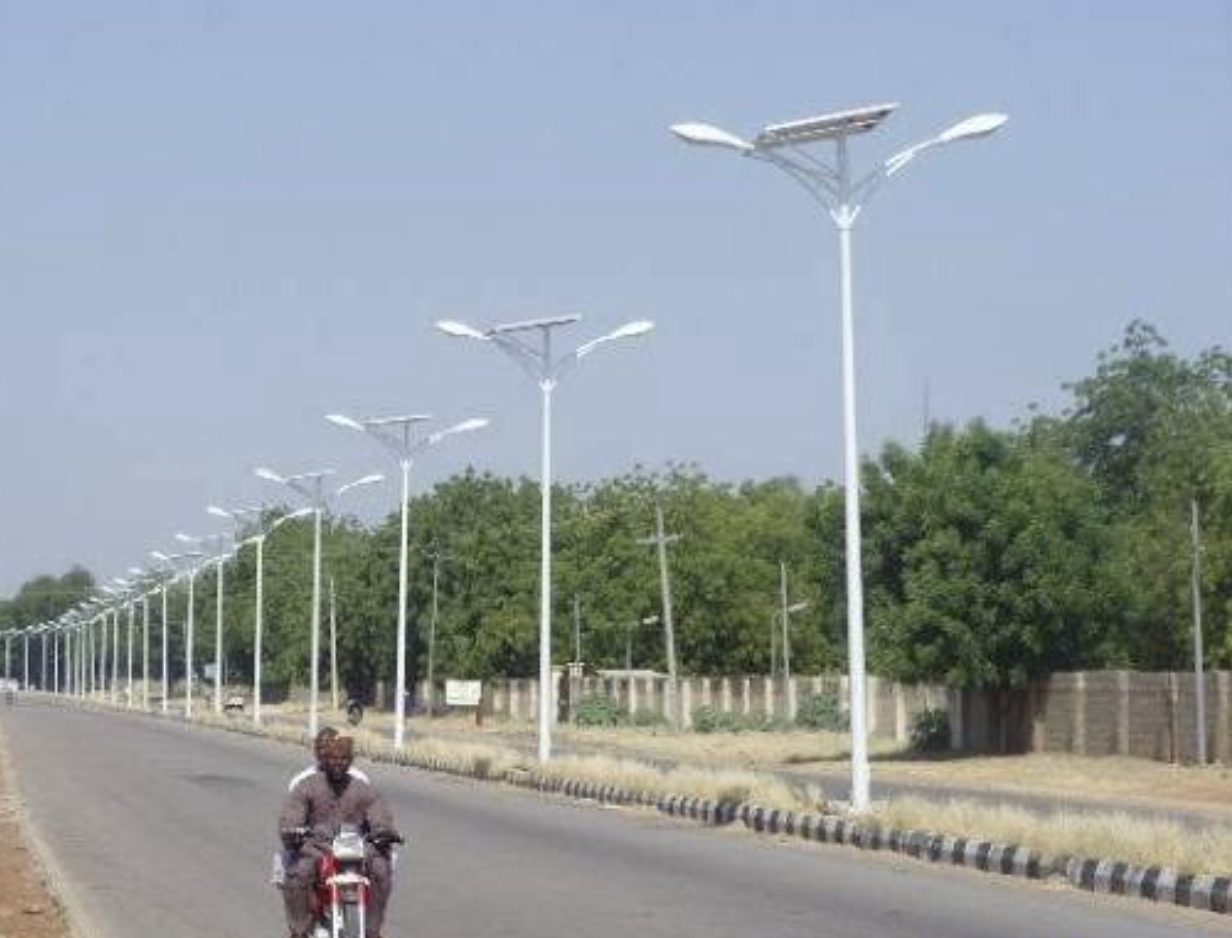
Ejura Sekyedumase Municipality demonstrates a more advanced product direction. In February 2026, the municipality began installing "ultra-modern self-cleaning solar double-head street light systems" around Ejura Prison, all police posts, the municipal hall, and the education office. These systems are equipped with high-efficiency photovoltaic panels, lithium-ion batteries, dual LED fixtures, and smart charge controllers. Most notably, the lights feature a self-cleaning panel design — using hydrophobic coatings, tilted installation angles, and natural rainwater washing to maintain panel efficiency, because dust accumulation can severely reduce power generation.
Kumasi Metropolitan Assembly installed 240 new solar street lights in January 2026. Ningo-Prampram District Assembly completed solar LED Street Light installation ahead of the Homowo festival. Biakoye Constituency's MP promised to distribute 800 street lights, all "all-in-one solar systems with LED lights, mounting brackets, and integrated batteries."
These cases point to one trend: procurement at the municipal level in Ghana has moved from "should we use solar" to "where do we buy it, and what kind do we buy."
The Unique Structure of the Ghanaian Market: Who Buys, and What They Buy
Understanding the procurement structure of the Ghanaian market is crucial for importers and suppliers.
Buyers are highly fragmented. Central government ministries (Ministry of Energy and Green Transition, Ministry of Roads and Highways) handle national deployment programmes; municipal assemblies (such as KMA and Cape Coast Metropolitan Assembly) handle local street light installation and maintenance; and individual MPs often donate street lights to their constituencies in a personal capacity. This means that for a Solar LED Street Light Supplier, the customer profile is much broader than "municipal procurement department" — it also includes local MP offices, corporate CSR departments, and international donor organisations.
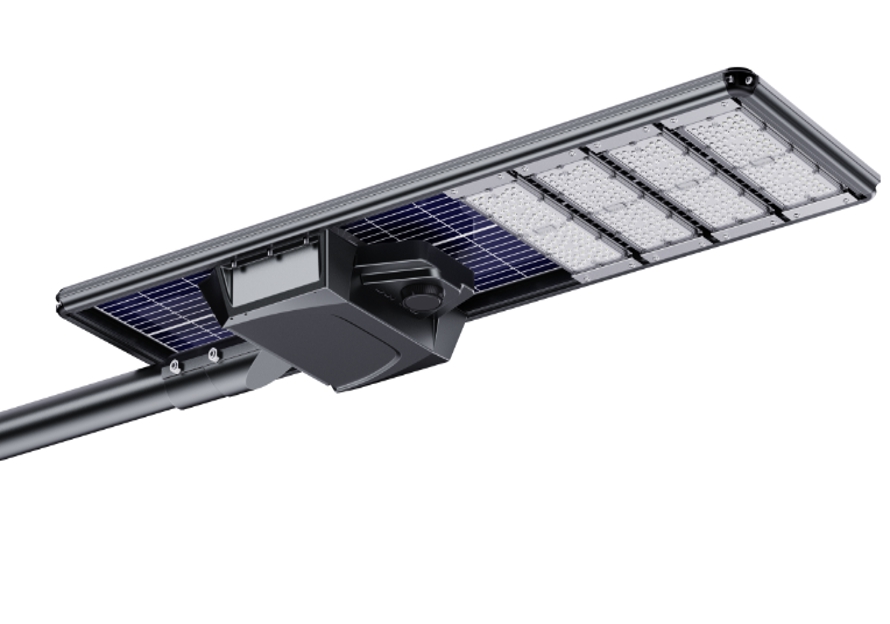
Product specifications have clear local preferences. Judging from actual procurement and donation cases in Ghana, all-in-one solar street lights are the dominant product form. The 800 street lights in Biakoye Constituency are all "all-in-one solar systems with LED lights, mounting brackets, and integrated batteries." Tender titles published on the government e-Procurement platform explicitly state "Installation of All-In-One Solar Smart Streetlighting Infrastructure." This means that for a Solar street lamp supplier hoping to enter the Ghanaian market, all-in-one design is a basic product adaptation requirement.
Self-cleaning features are becoming a differentiating demand. The Ejura Sekyedumase project specifically highlighted self-cleaning panel design, which has practical significance in Ghana's dustier northern environments. A Solar LED Street Light Supplier that can offer self-cleaning or easy-to-maintain designs will gain a competitive edge.
Tender processes are going digital. Ghana's government procurement has fully migrated to the GHANEPS e-tendering platform, and solar street light-related tenders are published frequently. Recent tenders include the supply of solar street lights for three CHPS facilities in the North East Region, and solar street lights for the new taxi shelter at the University of Cape Coast. For local Ghanaian contractors, this means they need stable and reliable suppliers to respond to these continuously released tender opportunities.
Industrial and Mining Lights: Another Growth Pole in the Ghanaian Market
While solar street lights are the hottest topic right now, Ghana's industrial and mining lighting market is also growing in parallel.
Ghana's industrial lighting market (including high bay, low bay, and explosion-proof lighting) is growing due to rising energy efficiency awareness, workplace safety requirements, and productivity demands. Particularly in gold mining areas (Obuasi, Tarkwa) and port operations (Tema, Takoradi), demand for high-power, IP66-rated, and explosion-proof LED floodlights continues. For Chinese suppliers also dealing in industrial and mining lights, Ghana offers a complementary category opportunity alongside street lights.
Three Practical Tips for Importers and Contractors
First, products must adapt to the two localisation requirements: "all-in-one" and "anti-theft." Judging from Ghanaian government tender documents and actual deployment cases, all-in-one solar street lights are the absolute mainstream. At the same time, given the severity of cable theft, products designed to reduce external cable connection points will be more likely to win favour in municipal projects.
Second, watch the GHANEPS e-tendering platform for ongoing opportunities. Ghana's government procurement has gone digital, and solar street light tenders are published frequently. For a Solar LED Street Light Supplier hoping to participate in municipal projects, building partnerships with local contractors familiar with the GHANEPS process is the shortest path into this market.
Third, don't overlook MP donations and foundation-sponsored procurement channels. In Ghana, a significant proportion of solar street lights come from individual MP donations and corporate sponsorship. The 800 lights in Biakoye Constituency, the 400 in Cape Coast, and the 500-village project donated by the Indian community — none of these went through traditional municipal tenders. For a Solar street lamp supplier, this means proactively engaging with local MP offices, corporate CSR departments, and international donor organisations, not just waiting for tender announcements.
Conclusion
The Ghanaian government's statement that it will "not install one more grid-connected street light" is not an environmental slogan — it is a pragmatic decision forced by cable theft and grid pressure.
The deployment plan for 23,500 solar street lights is already underway. Contracts for 10,000 smart solar street lights have been signed. The target of cutting 200 MW of grid load is being progressively realised. From Kwahu Afram Plains to Ejura Sekyedumase, from Kumasi to Ningo-Prampram, municipal assemblies across Ghana are proving through actual procurement action that this is a market on the verge of exploding.
For any Solar street lamp supplier and Solar LED Street Light Supplier looking for opportunities in Ghana, the question is no longer "will this market buy?" but "can you provide products that meet all-in-one design, anti-theft, and tender specification requirements?"
Looking for a partner for your next solar street light project in Ghana? Contact Laisi Lighting for all-in-one solar street light specifications, GHANEPS tender adaptation solutions, and local partnership terms.